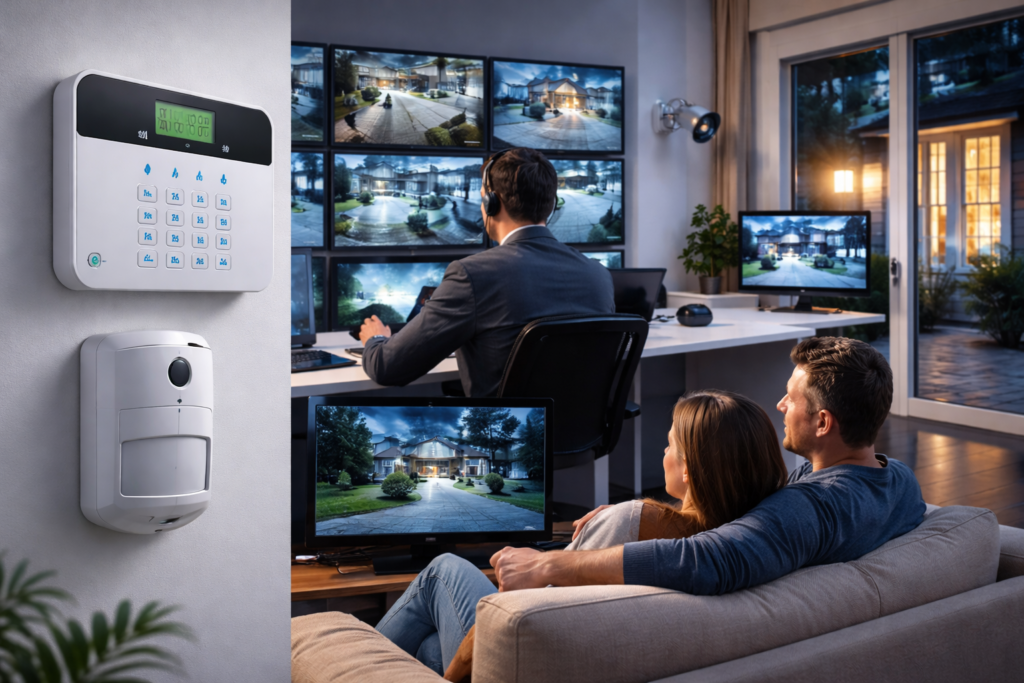

A home alarm monitoring system is often seen as the final layer of protection. But in many real-world break-ins, alarms do not stop entry; they respond after it has already happened.
This creates a false sense of security. Homeowners may believe their property is protected, while critical vulnerabilities remain unaddressed. Understanding what limits a home alarm monitoring system is key to preventing, not just recording, break-ins.
Why Alarm Systems Alone Do Not Prevent Break-Ins
Alarm systems are designed to detect and notify. They are not built to stop forced entry physically.
Criminals often act within seconds. If entry happens before the system fully triggers or before a response is initiated, the alarm becomes a notification tool rather than a preventive one.
This is why evaluating a home alarm monitoring system requires looking beyond sensors and alerts.
Understanding these limitations requires looking at how break-ins actually occur. The following factors explain where most home alarm monitoring systems fall short.
1. Breaking Glass Before Sensors Trigger
Many systems rely on motion sensors or delayed triggers. A forced glass entry can happen before those systems activate.
Common scenarios include:
- Sliding glass doors that shatter quickly
- Basement windows serving as low-visibility entry points
- Rear-facing glass with no immediate detection
In these cases, the entry occurs first. The alarm follows, meaning the system records the breach rather than preventing it.
2. Targeting Entry Points Without Sensors
Not every entry point in a home is covered equally.
Criminals often identify:
- Side doors with minimal reinforcement
- Garage entry doors connected to the home
- Basement access points with limited monitoring
If a home alarm monitoring system does not cover these areas, it creates predictable gaps. Even a well-installed system can be bypassed if coverage is incomplete or not aligned with real entry risks.
3. Disabling Visible Cameras Before Entry
Visible cameras act as deterrents. However, they can also become targets.
In some cases:
- Cameras are positioned within easy reach
- Wiring is exposed
- Coverage angles leave blind spots
If cameras are turned off before entry, the system loses both visibility and deterrence. This highlights the importance of placement, protection, and integration within the overall security system.
4. Exploiting Delay in Monitoring Response
Monitoring systems depend on communication and response time.
Even with professional monitoring:
- Alerts must be verified
- Signals must be transmitted
- Authorities must be dispatched
This creates a time window.
If entry and exit occur within that window, the alarm system records the event but does not prevent it.
This delay is one of the most overlooked limitations of home alarm monitoring in Canada.
The Role of Crime Prevention Through Environmental Design in Strengthening Alarm Systems
Crime Prevention Through Environmental Design (CPTED) focuses on reducing opportunities for crime before it occurs. It works by improving visibility, controlling access, and reinforcing vulnerable areas.
When combined with a home alarm monitoring system, CPTED principles help address the gaps discussed earlier.
Key CPTED strategies include:
- Improving natural surveillance around entry points
- Reinforcing doors and windows to resist forced entry
- Reducing hidden or low-visibility access areas
- Creating clear boundaries around the property
These measures make it more difficult to gain access, increasing the likelihood that an attempted break-in is abandoned before it progresses.
Blue Line Home Protection applies these principles alongside practical security upgrades, such as window security film, door reinforcement systems, and camera integration, to help reduce the risk of break-ins.
Homeowners looking to go beyond basic alarm systems can contact Blue Line Home Protection for home alarm monitoring services that identify vulnerabilities and strengthen protection before entry occurs.