
Many growing food brands face a common challenge: maintaining product quality while scaling distribution. Packaging that once worked for small batches often fails under larger shipping demands. This can lead to product damage, contamination risks, and increased operational costs.
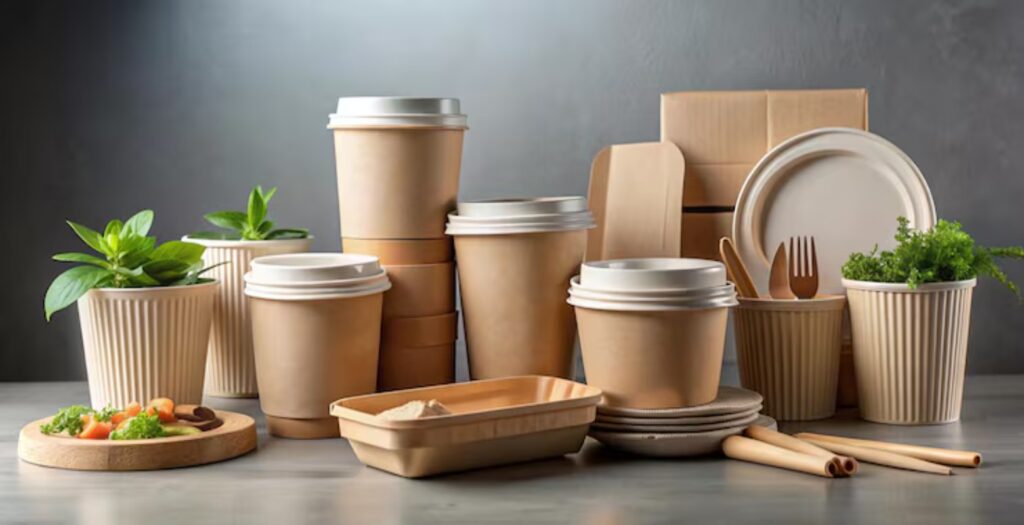
Choosing the right food packaging supplies is critical not just for protection but also for maintaining consistency and efficiency. Well-designed corrugated packaging solutions help businesses protect products, support logistics, and maintain packaging integrity across every stage of the supply chain.
Why Choosing the Right Food Packaging Supplies Matters
Food packaging plays a direct role in product safety and supply chain efficiency. Poor packaging choices can result in:
- Product spoilage or contamination
- Increased returns and damaged goods
- Higher shipping and handling costs
Selecting the right materials ensures:
- Consistent product protection
- Efficient storage and transport
- Compliance with packaging standards
1. Corrugated Boxes for Outer Protection
Corrugated boxes serve as the outer layer of protection in food packaging supplies. They provide structural strength during shipping and handling.
Key benefits include:
- Strong compression resistance for stacking
- Lightweight structure for cost-efficient shipping
- Custom sizing to reduce space
Corrugated packaging supports bulk transportation while minimizing product movement. Double-wall options offer added durability for heavier shipments.
2. Food-Grade Liners and Barrier Materials
Food-grade liners act as a protective barrier between the product and outer packaging. These materials help maintain hygiene and product integrity.
Common uses include:
- Preventing moisture exposure
- Protecting against contamination
- Preserving freshness during storage
Barrier materials are especially important for products sensitive to air, humidity, or external contaminants.
3. Flexible Packaging Films and Wraps
Flexible packaging films provide an additional layer of protection and sealing. These materials are often used for primary or secondary packaging.
Key advantages:
- Adaptability for different product shapes
- Effective sealing to maintain freshness
- Lightweight structure for reduced shipping costs
These films are widely used to wrap and secure products before placing them in corrugated boxes.
4. Protective Inserts and Dividers
Protective inserts and dividers help stabilize products within packaging. They reduce movement and prevent damage during transit.
Benefits include:
- Separation of multiple items within a box
- Improved load stability
- Reduced risk of breakage or shifting
Custom inserts can be designed to match specific product shapes, improving overall packaging efficiency.
How to Select the Right Combination of Food Packaging Supplies
Choosing the right combination of materials for food packaging supplies requires a structured approach. Key considerations include:
- Product Characteristics: Weight, fragility, and shelf life
- Shipping Conditions: Distance, handling, and storage environment
- Packaging Compatibility: How materials work together as a system
A well-integrated packaging system combines corrugated boxes, liners, films, and inserts to ensure complete protection.
Common Mistakes to Avoid When Choosing Food Packaging Supplies
Selecting the right packaging components is essential for maintaining product quality and operational efficiency. A combination of corrugated boxes, barrier materials, flexible films, and protective inserts creates a reliable packaging system that supports growing distribution needs.
Businesses often encounter challenges due to incorrect packaging decisions. Common mistakes include:
- Using oversized boxes that increase movement and reduce damage
- Ignoring moisture protection requirements
- Overlooking the need for internal cushioning
- Selecting materials from unreliable food packaging companies without considering supply chain conditions
Avoiding these issues improves packaging performance and reduces long-term costs.
Businesses seeking structured, dependable packaging solutions can contact Coleman Containers for tailored corrugated packaging that supports diverse industry requirements.