
Rising energy costs, stricter discharge limits, and aging infrastructure continue to pressure industrial facilities. Many water treatment systems operate with equipment selected years ago, before energy optimization and automation became standard practice. Targeted upgrades from reliable water treatment equipment suppliers often reduce operating costs faster than expected.
Water treatment equipment should not be viewed only as a compliance necessity. With correct selection, it functions as a cost-control tool that improves efficiency, reduces downtime, and protects long-term margins. This blog explains five upgrades that deliver measurable returns for facilities that rely on industrial pumps and fluid-handling systems.
Why Water Treatment Upgrades Should Be Viewed as Cost-Control Tools
Water treatment processes depend on steady flow, accurate dosing, and consistent pressure. Small inefficiencies compound daily.
Common cost drivers include:
- Oversized or inefficient pump systems
- Continuous full-speed motor operation
- Inconsistent chemical dosing
- Membrane fouling and premature replacement
- Manual monitoring that delays response
Strategic upgrades from water treatment equipment suppliers address these issues at the source. Instead of reacting to failures, facilities improve system balance and reduce energy and chemical waste.
1. High-Efficiency Pump Systems
Pumps often account for the largest share of energy use in water treatment. Older centrifugal or positive displacement pumps may operate outside their best efficiency point. This increases power draw and wear.
Upgrading to properly sized, high-efficiency pump systems delivers measurable savings by:
- Aligning flow and head with actual demand
- Reducing recirculation losses
- Lowering motor amperage
- Extending seal and bearing life
Improved hydraulic performance also stabilizes downstream filtration and dosing equipment. Consistent flow reduces strain across the system. Over time, reduced maintenance and lower electricity consumption offset capital investment.
2. Variable Frequency Drives (VFDs)
Many treatment facilities still run pumps at full speed, even during low-demand cycles. A variable frequency drive adjusts motor speed based on actual system requirements.
Energy savings occur because pump power consumption drops significantly at reduced speeds. Even modest speed reductions create meaningful cost differences.
Key benefits of installing VFDs include:
- Lower peak energy demand
- Reduced mechanical stress
- Smoother system ramp-up and shutdown
- Better pressure control
When paired with efficient industrial pumps, VFDs enhance performance without major infrastructure changes. The result is immediate energy reduction and improved process stability.
3. Automated Chemical Dosing Systems
Manual dosing or inconsistent metering often leads to overuse of treatment chemicals. Overdosing increases material costs and can damage membranes or downstream components. Underdosing risks compliance issues.
Automated chemical dosing systems use calibrated metering pumps and feedback signals to maintain precise injection rates.
Advantages include:
- Accurate flow-proportional dosing
- Reduced chemical consumption
- Improved process consistency
- Less operator intervention
Accurate dosing lowers recurring chemical expenses while improving effluent quality. Facilities frequently recover upgrade costs solely through chemical savings.
4. Membrane Filtration Upgrades (UF/RO Optimization)
Ultrafiltration (UF) and reverse osmosis (RO) systems represent significant capital investment. Poor pre-treatment, inconsistent pressure, and unstable flow accelerate fouling.
Membrane optimization focuses on:
- Stable feed pressure
- Balanced crossflow velocity
- Improved pre-filtration
- Automated backwash cycles
Upgraded industrial water pump control and dosing accuracy directly protect membrane integrity. As fouling decreases, cleaning frequency decreases and membrane replacement intervals increase. Reduced downtime and longer service life produce clear financial returns.
5. Smart Monitoring & Remote Sensors
Manual inspections delay response to pressure shifts, flow fluctuations, or chemical imbalance. Smart monitoring systems provide continuous data through level sensors, flow meters, and pH or conductivity instruments.
Benefits include:
- Early leak detection
- Real-time pressure monitoring
- Accurate chemical control
- Reduced emergency repairs
Remote visibility enables faster corrective action. Preventive maintenance replaces reactive breakdowns. This shift alone reduces overtime labour and unplanned downtime.
Strategic Upgrades Deliver Long-Term Operational Stability
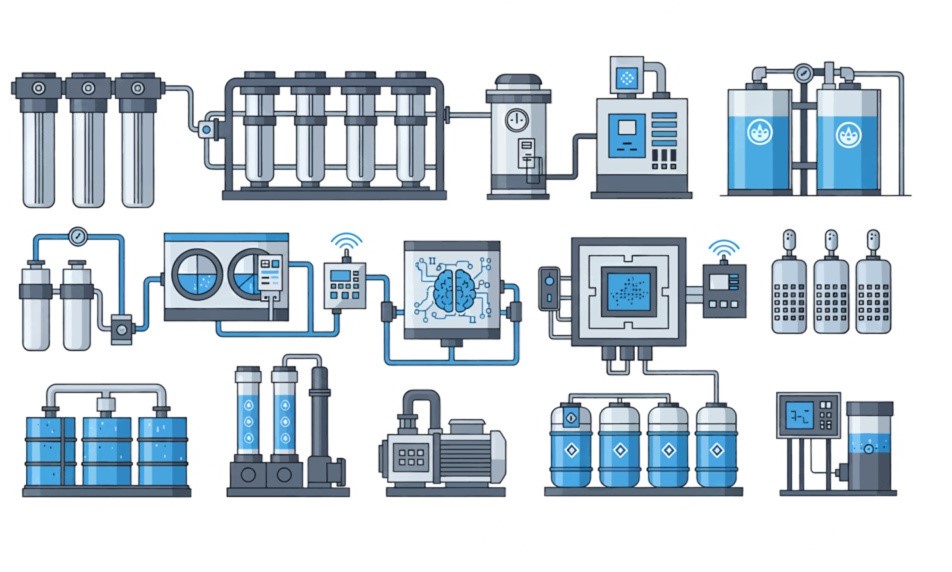
Water treatment performance depends on balance. Efficient pump systems, controlled motor speed, accurate dosing, membrane protection, and intelligent monitoring work together. When these elements align, facilities gain:
- Lower energy consumption
- Reduced chemical costs
- Extended equipment life
- Improved regulatory compliance
- Fewer emergency repairs
Each upgrade addresses a specific inefficiency. Combined, they transform water treatment from a cost burden into a controlled operational asset.
Facilities evaluating system improvements can contact Vissers Sales Corp. to assess a practical upgrade to a heavy-duty industrial water pump that aligns with process requirements.