
Shackles are one of the most relied-upon connection points in industrial lifting systems, yet they are also among the most frequently misused. When a shackle fails, the result is often sudden and severe—dropped loads, damaged equipment, and serious safety risks. Many of these failures can be traced back to overlooked inspection steps or improper matching of shackles to the lift plan.
Before any lift begins, taking a few moments to inspect lifting shackles helps ensure the entire rigging system performs as intended. This guide outlines five critical checks that industrial crews should complete before putting shackles into service.
Why Shackle Inspection Matters
Shackles act as the link between slings, hooks, lifting lugs, and loads. They are designed to carry force along a specific load path, and any deviation from that design reduces their practical capacity. Even heavy-duty shackles can fail if used incorrectly or if damage goes unnoticed. Regular inspection ensures that each shackle can safely and consistently support the load.
1. Pin Integrity
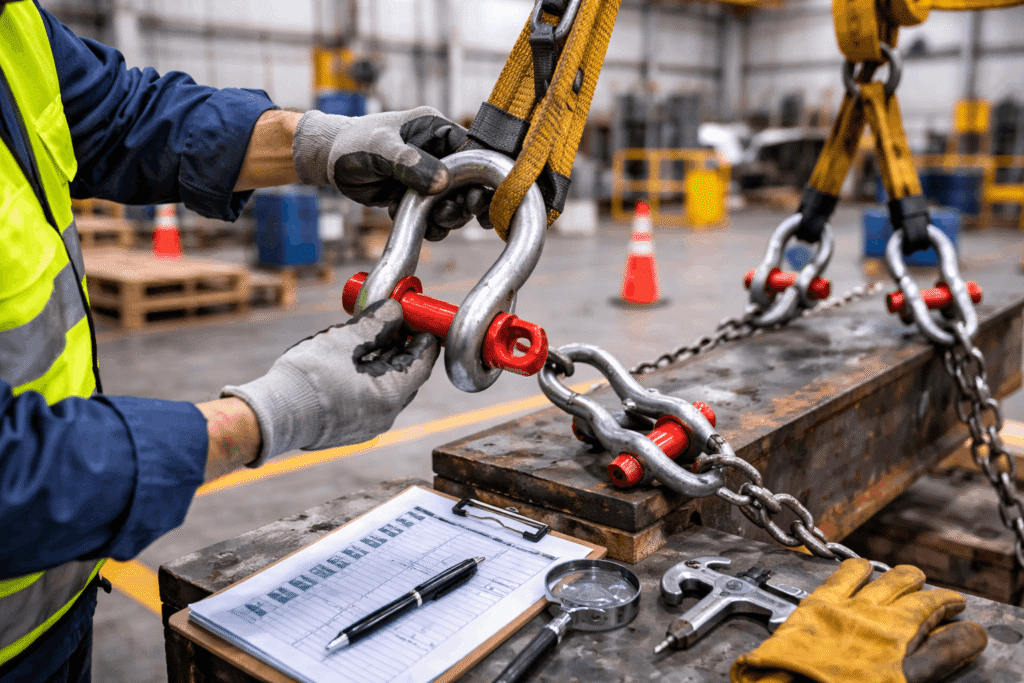
The pin is the most critical component of a shackle. It must remain straight, fully seated, and undamaged to maintain the shackle’s rated strength.
Before use, check that:
- The pin is straight with no visible bending
- Threads are intact and free of deformation
- The pin seats entirely against the shackle body
- There are no cracks, gouges, or excessive wear
For bolt-type or safety-pin shackles, ensure the nut and cotter pin are present and properly secured. A compromised pin significantly weakens the connection, regardless of the shackle body condition.
2. Load Rating Visibility
Every shackle used in an industrial lift must have a clearly marked Working Load Limit (WLL). This marking confirms that the shackle has been manufactured and tested to a specific capacity.
Always verify that:
- The WLL is legible and matches the lift requirements
- Manufacturer identification is visible
- The shackle grade is appropriate for overhead lifting
If markings are worn, illegible, or missing, the shackle should be removed from service immediately. Using unmarked rigging shackles introduces uncertainty and increases liability.
3. Thread Wear and Engagement
Thread condition plays a key role in load retention, especially for screw-pin shackles. Worn or damaged threads prevent proper engagement and may allow the pin to loosen under load.
Inspect threads for:
- Flattening or stripping
- Corrosion buildup
- Cross-threading
- Incomplete engagement when tightened
The pin should thread smoothly and seat fully without resistance. If the pin does not engage properly, replace the shackle rather than forcing it into service.
4. Size and Compatibility
Shackles must be correctly sized for the components they connect. Oversized or undersized shackles can create uneven loading or restrict movement.
Confirm that:
- The shackle bow accommodates the sling or hardware without crowding
- The pin diameter matches the lifting lug or attachment point
- Components align without forcing or bending
Proper sizing ensures that load forces remain centered within the shackle body. This is especially important for crane shackles, which often experience dynamic loading during lifts.
5. Avoiding Side Loading
Shackles are designed to carry a load in line with the pin. Side loading introduces bending forces that dramatically reduce capacity and increase the risk of failure.
Before lifting, ensure that:
- The load is applied straight through the shackle
- The pin is not supporting side forces
- The shackle can rotate freely to align with the load path
If the lift geometry requires angled loading, use hardware rated explicitly for that configuration rather than forcing a standard shackle into an unsuitable role.
Safe Lifting Starts With Smart Inspection
Shackles may appear simple, but their role in industrial lifting systems is critical. Taking the time to inspect pin integrity, confirm load ratings, check thread condition, verify sizing, and avoid side loading helps prevent failures before they occur. Whether using standard lifting shackles or specialized crane shackles, proper inspection supports safer lifts and more reliable rigging operations.
By building routine shackle checks into pre-lift procedures, industrial teams protect equipment, reduce downtime, and maintain confidence in every lift. For more information, contact us today!